
Introduction
A two-day drive can feel like a blur or a miniature epic depending on how you plan it. For families juggling restless kids, tight budgets, and the desire for meaningful local experiences, smart road trip planning turns cramped hours into memorable moments: a sunrise hike, a bustling town market, and a campsite dinner that smells like wood smoke and grilled corn. This piece shows how to design a realistic 48-hour family road trip that balances culture, outdoor adventure, and frugal choices without sacrificing joy.
Main Insight
The core idea is trade-offs: pick one aim per chunk of the trip and optimize logistics around it. Instead of packing the schedule with “must-sees,” choose a primary experience for each half-day—nature, culture, or driving views—and build practical buffers around those priorities. That focus keeps kids calmer, reduces fatigue, and gives you the freedom to linger where the trip feels richest. Thoughtful planning that accounts for nap times, bathroom breaks, food preferences, and affordable lodging turns a short road trip into a relaxed, high-impact escape.
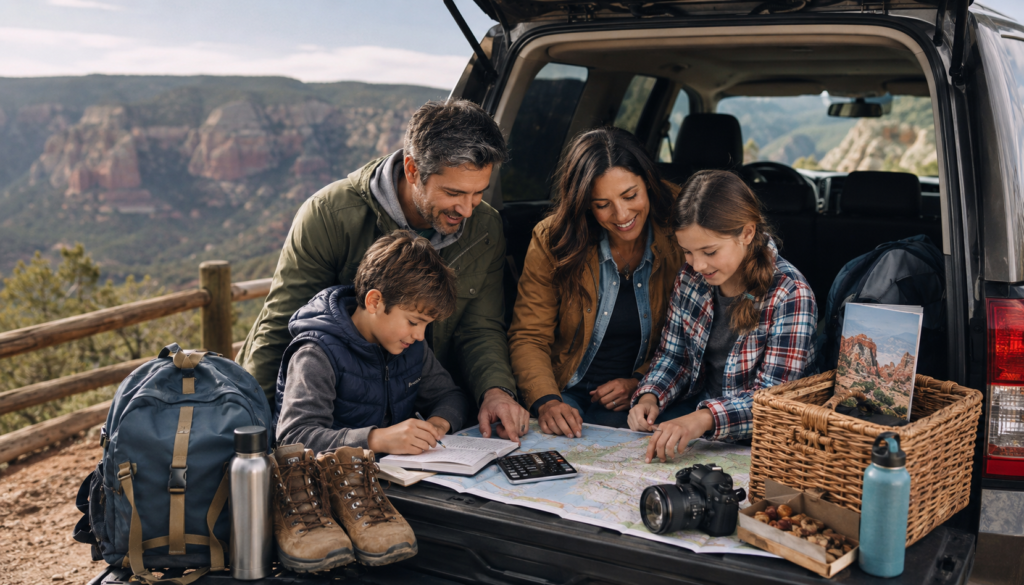
A family maps out a 48-hour road trip with smart budgeting, cultural stops, trail planning, snacks, gear, and a flexible adventure plan.
Practical Tips
1) Route with rhythm: map a route that limits daily driving to 3–4 hours total. For a 48-hour trip, aim for two main stops plus a short scenic drive between them. Use driving time in the morning and late afternoon when light is best and kids can nap.
2) Build one unmissable stop per half-day: morning hike, midday cultural market or small-town museum, late afternoon viewpoint. Prioritize experiences over quantity—a 90-minute guided nature walk or a hands-on artisan visit is more vivid than three rushed stops.
3) Budget smart: choose one paid activity (park entrance, guided tour) and offset it with free or low-cost options (beach, picnic, public playground). Pack meals for one full day and plan for one local restaurant meal to taste the region affordably. Look for family passes or community centers for low-cost cultural experiences.
4) Pack for comfort and speed: a small daypack per adult, layered clothing, reusable water bottles, basic first-aid, sunscreen, and a kid comfort item. For hiking, bring lightweight trekking poles for toddlers or a child carrier if needed. Keep a small “car kit” with wet wipes, trash bags, snacks, and spare socks.
5) Safety and logistics: check vehicle fluids, tire pressure, and insurance coverage before you leave. Download offline maps and save the address of your lodging and the nearest medical facility. Share your itinerary with a close friend or family member and set simple check-in times.
6) Kids and boredom hacks: create a playlist, an activity envelope with postcards and stickers, and two small surprise treats. Turn parts of the trip into scavenger-hunt games tied to local culture (find a farmer’s stand, identify three bird species, try a regional snack).
7) Make it sustainable: pack reusable utensils, skip single-use plastics, and follow Leave No Trace principles on trails. Support local vendors and tip thoughtfully—the cultural exchange is part of the trip’s value.
8) Solo or remote-worker adjustments: if traveling alone with kids or blending work and travel, book mid-day co-working cafes or short-term day passes at community centers as backup. Carry a portable battery, a mobile hotspot, and noise-cancelling earbuds for quick work sprints while kids nap.
Real Example
Imagine a coastal region 90 miles from home. Day 1: depart at 8:00 a.m. to catch cooler morning driving and kids’ nap windows. Stop at a family-run bakery in a seaside town for breakfast (local pastry, compostable cups), then a 60-minute guided tidepool walk where a local naturalist points out starfish and anemones. Lunch is a picnic on the bluff—sandwiches packed from home and fruit bought at a roadside stand. Afternoon is a 90-minute easy hike to a viewpoint with interpretive signs; let kids lead a short nature journaling activity. Evening check-in at a modest cabin or large-family hostel; cook a simple meal or enjoy a low-cost fish-and-chips spot recommended by locals.
Day 2: early 30-minute drive to a farmer’s market for fresh breakfast items and a short cultural demo—maybe a pottery maker showing wheel techniques. Midday visit to a small, free museum or community art center where kids can try a quick craft. Stop for an easy 45-minute waterfall walk on the return route, then head home in the late afternoon to avoid rush-hour stress. Throughout, keep a running estimate of expenses—gas, one paid naturalist fee, two meals out, lodging—so you maintain the budget without losing the trip’s feel.
Adaptations: traveling solo? Swap the cabin for a budget B&B with a communal porch to meet locals. Students or backpackers can ditch the rental car for a fuel-efficient hatchback and camp at a municipal campground. Remote workers can add a midday café with strong Wi‑Fi for an hour of emails while kids do a supervised craft at a nearby park.
Conclusion
A successful 48-hour family road trip is less about ticking destinations off a list and more about curating moments: a shared sunrise hike, a market discovery, and relaxed time in the car with meaningful stops. With clear priorities, simple gear, and thoughtful pacing, you’ll come home with stories, a few sandy shoes, and the confidence to plan the next short escape. Start by picking one memorable half-day experience for each chunk of the trip, map realistic drive times, and build in small sustainable choices that keep the journey affordable and authentic.