
Introduction
Busy parents, evening commuters, or stressed students know the spiral: work, homework, practice, and then ordering the easiest takeout. One-pan dinners flip that script without adding time or dishes. In 30 minutes you can plate a balanced meal — protein, veg, and a starchy note — cooked in one skillet or sheet pan, with enough flavor to make everyone at the table pause and smile. This article shows why one-pan dinners work for real weeknights and how to make them reliably tasty, fast, and family-friendly.
Main Insight
The core idea is smart sequencing and contrast. One-pan dinners succeed when you pair a quick-cooking protein with quick or prepped vegetables, build flavor through browning and a compact sauce, and finish with a bright element for freshness. Browning creates depth that feels takeout-worthy, while a simple pan sauce or glaze ties components together. The trick is timing: start items that need more heat first, add delicate items later, and keep cleanup to one vessel. This method cuts both total cook time and mental overhead, making homemade meals more likely on hectic nights.

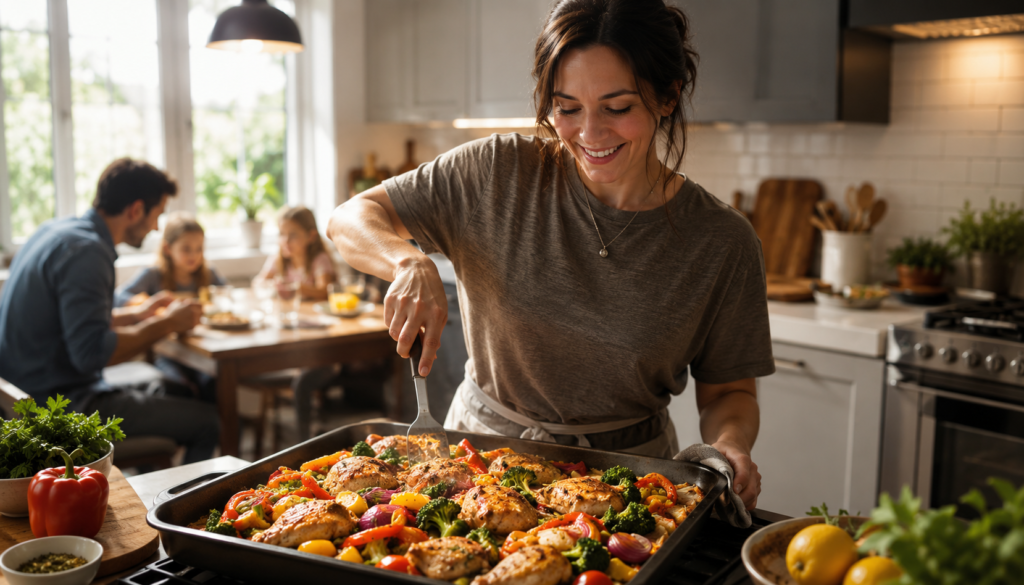
Skip the takeout and bring the family together with a colorful one-pan dinner that is quick, fresh, and ready for busy weeknights.
Practical Tips
Plan like a short shift at the restaurant: mise en place, heat your pan, and multitask.
– Choose the right pan: a heavy skillet, large sauté pan, or rimmed sheet pan with a little oil will hold heat and allow good browning.
– Pick protein wisely: thin chicken cutlets, shrimp, ground meat, fish fillets, or firm tofu cook fast. Precook or use rotisserie chicken when you need a shortcut.
– Cut evenly: chop vegetables to a uniform size so they cook at the same rate. Denser veg like carrots and potatoes should be smaller or par-cooked.
– Layer flavors: start with aromatics such as garlic, ginger, or shallots; brown protein, then deglaze the pan with stock, soy, or wine to make a sauce that clings to ingredients.
– Use heat strategically: medium-high for searing, lower to finish. A hot pan gives caramelization that feels restaurant-quality.
– Add quick greens last: baby spinach, snap peas, or scallions only need a minute or two.
– Kid and picky-eater swaps: keep a portion plain or toss sauce on the side. Use familiar spices and mild glazes like honey-soy for acceptance.
– Pantry shortcuts: canned tomatoes, jarred pesto, or bottled lemon juice are useful when fresh isn’t on hand.
– Make it a routine: double vegetable or grain portions midweek for easy lunches or reheat-friendly dinners.
– Leftovers and storage: cool quickly, store in shallow containers, and reheat gently on the stovetop to keep texture.
Real Example
One-pan honey-sesame chicken with broccoli and quick jasmine rice
Ingredients for four: 1 1/2 pounds boneless skinless chicken thighs trimmed and cut into 1-inch pieces, 1 head broccoli cut into florets, 1 cup jasmine rice, 2 cups low-sodium chicken stock, 2 tbsp oil, 2 cloves garlic minced, 3 tbsp honey, 2 tbsp soy sauce, 1 tbsp rice vinegar, sesame seeds and scallions to finish.
How it fits 30 minutes:
– 0 to 6 minutes: Heat a large skillet over medium-high with oil. Season and sear chicken in batches until golden, about 3 minutes per batch. Remove and set aside.
– 6 to 8 minutes: Add garlic, lightly brown, then add rinsed jasmine rice. Toast for 1 minute.
– 8 to 28 minutes: Pour in stock, bring to a simmer, cover and reduce heat to low for 12 minutes. Meanwhile, in a second edge of the skillet or a small pan, quickly steam or sauté broccoli with a splash of water and a pinch of salt for 4 to 6 minutes until tender-crisp.
– 28 to 30 minutes: Return chicken to the skillet, stir in honey, soy, and vinegar, and warm through over medium heat. Fold in broccoli, sprinkle sesame seeds and scallions, and serve.
Why it works: the rice cooks in the same skillet liquid that picks up fond from the chicken, the honey-soy glaze brightens with vinegar, and the broccoli keeps texture because it’s added late. Substitutions: use brown rice but expect longer cook time or swap pre-cooked rice and finish in 5 minutes; replace chicken with tofu or shrimp; add frozen peas for budget-friendly green.
Conclusion
One-pan dinners are less about a single recipe and more about a flexible approach to weeknight cooking. With a few techniques — even browning, timely additions, and a compact sauce — you can turn pantry staples into meals that beat takeout for flavor, nutrition, and cost. Start with three favorite combos, rotate proteins across the week, and you will find yourself clearing the table faster than a delivery driver ever could.