
Introduction
A Wednesday evening. Kids need homework help, a meeting ran late, and the last thing you want is to call for delivery again. One-pot meals are the antidote to that churn of stress and takeout boxes. They cut cleanup, speed up cooking, and concentrate flavor so a single pan delivers dinner that feels thoughtful and home-cooked. This piece is for busy parents, solo renters, grad students, and anyone who wants a satisfying weeknight meal on the table in about 30 minutes without sacrificing taste or sanity.
Main Insight
The central idea is simple: build dinners around protein, aromatics, a starchy binder, and quick-cooking vegetables, and cook them in one vessel using high heat, good seasoning, and timed layering. Why this works: concentrated heat and minimal transfers let ingredients brown and release flavor into the pan, while a measured liquid binds those flavors into a saucy finish. With a dependable method and a handful of pantry staples—olive oil, garlic, a sturdy grain or pasta, a flavorful broth, and a fresh herb or acid—you can transform the same base into many distinct dinners. The payoff is big: homemade food that tastes richer than its 30-minute timeline suggests and uses fewer dishes than a single takeout order.

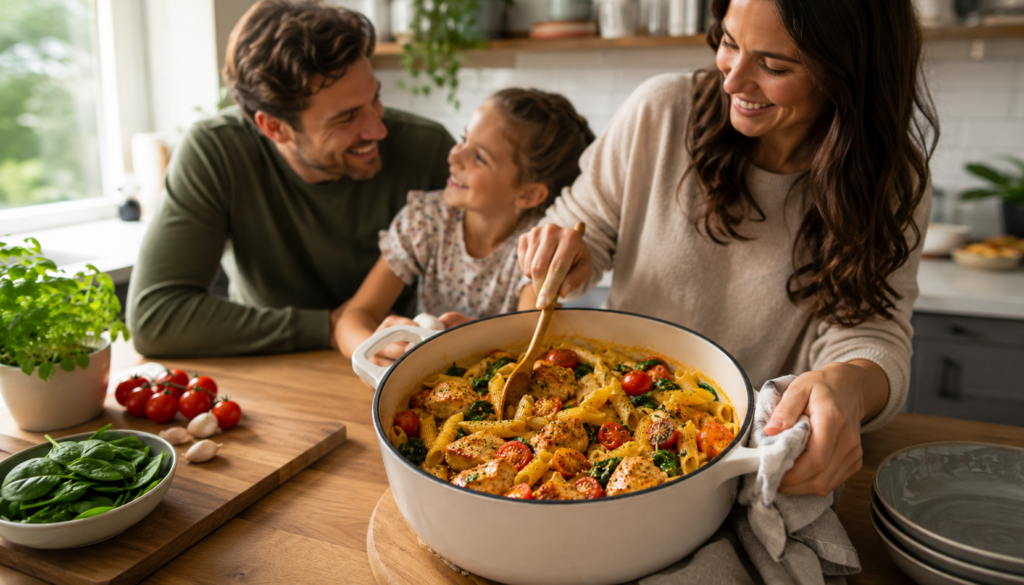
Swap takeout for a simple one-pot meal that brings fresh ingredients, fast cooking, and cozy weeknight comfort to the table in 30 minutes.
Practical Tips
Plan for 30 minutes by thinking in three phases: prep, sear, simmer. Prep in 10 minutes: chop aromatics, measure broth, and portion protein. Sear in 6 to 8 minutes to develop color. Simmer with starch and liquid for 10 to 12 minutes until everything is tender and saucy.
Choose the right pan. A heavy skillet with a tight-fitting lid or a medium Dutch oven holds heat, prevents excessive evaporation, and gives an even result. Cast iron, enameled Dutch ovens, and heavy-bottomed stainless skillets are the most forgiving.
Match starch to time. Quick-cooking pasta, risotto rice (arborio), or thinly sliced potatoes will finish in about 10 to 12 minutes when covered. Longer-cooking grains like brown rice will need pre-cooking or a pressure-cooker approach.
Favor bold aromatics. Start with sliced onion and garlic, or garlic with scallions and ginger for an Asian-leaning dinner. Toast spices briefly in oil to bloom flavors before adding liquids.
Use concentrated liquids for depth. A good-quality store broth, a splash of soy sauce or fish sauce, and a squeeze of lemon or a splash of vinegar at the end brightens a stew that may otherwise taste flat.
Think in layers, not chaos. Add ingredients by their cook times. Sear protein first, remove, sauté aromatics, add grains or pasta, then return protein near the end. For vegetables that cook quickly, add them in the last 5 minutes to keep color and texture.
Make smart swaps. Low on chicken thighs? Use sliced turkey breast or firm tofu. No arborio? Use short pasta and reduce liquid slightly. Out of fresh herbs? Use a small pinch of dried herbs at the beginning and finish with citrus or chili flakes for brightness.
Shortcut options. Use rotisserie chicken, frozen peas, pre-chopped onions, or canned beans to shave prep time. When using precooked ingredients, reduce simmer time so nothing overcooks.
Season with confidence. Taste midway through the simmer, then again at the end. Salt in stages: a little with aromatics, adjust after the liquid reduces. Finish with a fat like olive oil, butter, or a drizzle of sesame oil to add silkiness.
Real Example
One-Pot Lemon Garlic Chicken and Rice (serves 4) — Total time 30 minutes
Ingredients you likely have: 1 pound boneless, skinless chicken thighs, cut into 1- to 1.5-inch pieces; 1 cup arborio rice or short-grain rice; 1 small onion, finely chopped; 3 cloves garlic, minced; 2 cups low-sodium chicken broth; zest and juice of 1 lemon; 2 cups baby spinach or chopped kale; 2 tablespoons olive oil; 1 teaspoon dried oregano or 1 tablespoon chopped fresh parsley; salt and pepper.
Step-by-step: Heat the skillet over medium-high heat with 1 tablespoon olive oil. Season chicken with salt and pepper and sear in a single layer until browned, about 3 minutes per side. Transfer chicken to a plate. Add remaining tablespoon oil and sauté onion until translucent, 3 minutes. Stir in garlic and rice, toasting the rice for 1 minute. Pour in broth and lemon zest, scrape browned bits from the pan, bring to a simmer, then nestle the chicken back into the liquid. Cover and lower heat to maintain a gentle simmer for 10 to 12 minutes, until rice is tender and liquid is absorbed. Stir in lemon juice and spinach, let wilt, then finish with a drizzle of olive oil and a sprinkle of oregano or parsley. Taste and adjust salt and pepper.
Realistic substitutions and tips: Use short pasta instead of rice: add 2 1/4 cups water, stir in pasta, and cook uncovered for 8 to 10 minutes, stirring occasionally. Swap tofu for chicken and use vegetable broth. If you only have brown rice, par-cook it in the microwave for 10 minutes before starting, then finish in the skillet for 10 minutes.
Meal prep friendly: Double the rice and freeze half in an airtight container for quick weeknight dinners. Leftovers reheat well with a splash of broth to refresh the rice.
Conclusion
One-pot weeknight meals are not a compromise, they are a strategy. With a small set of techniques—searing, timing, and finishing—you can turn modest ingredients into dinner that tastes deliberate and satisfying in about 30 minutes. Start with pantry-friendly starches, dependable proteins, and confident seasoning. In a few evenings you will feel the payoff: less takeout, fewer dishes, and a house that smells like home.