
Introduction
You have a long weekend and a tight budget, but you want a trip that feels cinematic—not a rushed checklist. This 48-hour travel itinerary is designed for solo travelers who crave a mix of outdoor adventure, local culture, and economical logistics. It shows how to shape a short trip that finishes with stories, not fatigue: sunrise hikes, a neighborhood market that smells of spices and roasting coffee, and a late-night corner diner where you compare notes with a local musician.
Main Insight
A short trip succeeds when you trade ambition for focus: pick one landscape type (coast, mountains, lakeside, or city neighborhood), two meaningful experiences (one active, one cultural), and one reliable base (a single neighborhood or campground). That formula—landscape + active + cultural + base—keeps travel time low, lowers costs, and deepens the experience. For budget solo travelers, prioritize free or low-cost activities (public trails, markets, street music) and one modest splurge (a guided tour, special meal, or local craft workshop) to anchor memories.
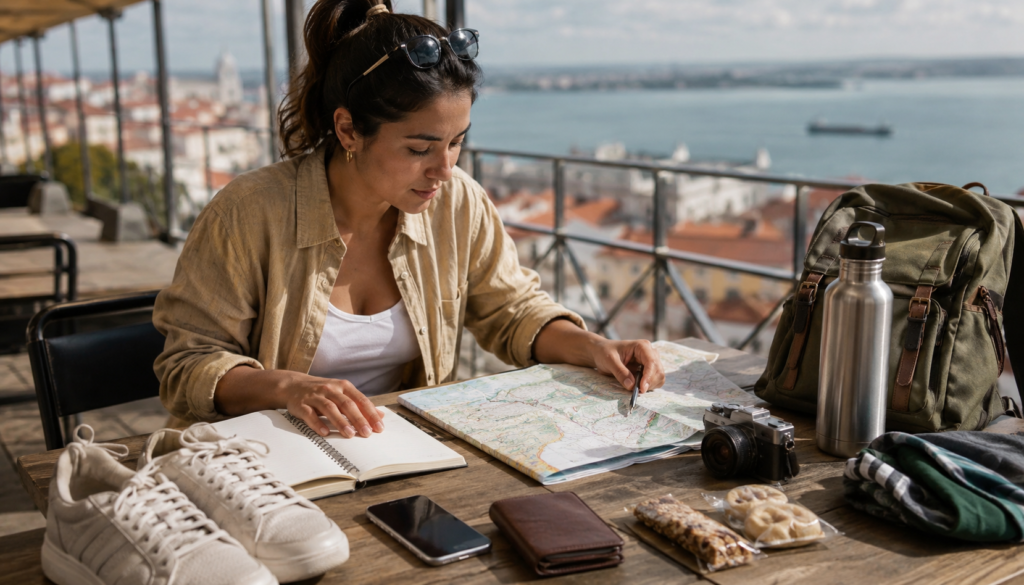
A solo traveler maps out a 48-hour budget adventure with smart planning, local experiences, walking routes, travel essentials, and a flexible itinerary.
Practical Tips
1) Plan a tight radius: Choose accommodations within a 20–45 minute transit window of your main activities. Less transit = more exploration time and fewer ride-share costs.
2) Time chunks, not minute-by-minute: Structure your days into morning, midday, late afternoon, and evening. Reserve mornings for active outings (hike, bike, sunrise viewpoint) when light is best and crowds are thin.
3) Pack versatile gear: a lightweight daypack, quick-dry layers, waterproof jacket, sturdy shoes that work for a city walk and a short trail, basic first-aid items, and a power bank. For hiking, bring a map or offline route, 2 liters of water, snacks, and a headlamp if you’ll be out at dawn or dusk.
4) Budget by category: transport, lodging, food, activities, emergency buffer. A realistic weekend for budget solo travel can range from $120–$350 depending on distance and accommodation. Example split: transport $40–$120, lodging $40–$120, food $30–$60, activities $10–$50.
5) Local culture that costs nothing: visit a farmers’ market, stroll a historic district, listen to free live music, or join a community event. Ask shop owners about favored spots—locals often share inexpensive, memorable recommendations.
6) Safety and solo specifics: share your itinerary with a friend, keep digital copies of IDs, and pick accommodations with good reviews in safe neighborhoods. Limit late-night solo wandering in unfamiliar, poorly lit areas. Trust instincts and meet locals in public spaces.
7) Modifications for other traveler types: Families—substitute a longer museum visit for a solo coffee shop stop and choose kid-friendly trails; Budget backpackers—camp or use hostels and cook from markets; Remote workers—select an Airbnb with strong Wi-Fi and plan a 90-minute co-working café slot in the afternoon.
Real Example
Imagine a Friday night to Sunday afternoon trip to a mid-size mountain town 3 hours from a nearby city. Friday night: arrive early, check into a budget guesthouse in the artsy neighborhood, walk to a boardwalk of food trucks, and listen to a local guitarist (senses: wood smoke, chili, the scrape of guitar strings).
Saturday morning: 6:00 a.m. sunrise hike to a nearby ridge (2 hours roundtrip). Bring coffee in a thermos and watch the valley fog burn off. Midday: return to town, refill water at a public fountain, and eat a market lunch of flatbreads and pickled greens ($8–$12). Afternoon: visit a small cultural museum or a ceramics studio where you can watch a potter work (free to low-cost). Late afternoon: relax at a riverside park with a paperback or sketchbook. Evening: splurge on one memorable meal—local farm-to-table restaurant or tasting menu ($25–$40). Night: sleep well and chat with other travelers at the guesthouse.
Sunday morning: rent a bike ($15) and take a quiet backroad that passes a family-run orchard—stop to pick seasonal fruit or buy a jar of jam as a small souvenir. Midday: a quick visit to a historic homestead or a guided 90-minute food-walk that highlights regional specialties. Head home with time for a scenic drive detour and a rest stop at a lookout—avoid rushing the return to keep the trip feeling unhurried.
How to adapt: If you’re a family, choose a shorter hike with a playground finish and a picnic instead of the splurge dinner. If you’re on a shoestring, replace the guesthouse with a well-reviewed hostel or campsite and cook two meals from market ingredients. Backpackers might extend the active outing to a full-day loop and skip the paid museum visit.
Conclusion
A meaningful 48-hour travel itinerary is less about seeing everything and more about designing the right mixture: one bold outdoor experience, one close-up cultural moment, and one slow meal to anchor the day. With intentional planning—smart radius, layered packing, a modest budget plan, and a local-first mindset—you can return home rested, richer in stories, and confident about planning the next short adventure.