
Introduction
On a Monday evening when homework, meetings, and errands collide, the idea of cooking from scratch can feel impossible. This article is for parents, roommates, and anyone juggling time and a tight grocery budget who still wants meals that taste homemade. One-pot dinners are the practical answer: they cut cleanup, stretch ingredients, and deliver comforting flavor without hours at the stove.
Main Insight
The core idea is simple: build flavor in a single vessel by layering aromatics, protein, starch, and a braising liquid. A healthy, satisfying meal is possible in one pot because slow flavor development is not the only route to depth — salt, acid, browned bits, and finishing herbs do most of the heavy lifting. With a modest pantry and 30 to 45 minutes, you can make a nutritious dinner that feels thoughtful. One-pot cooking also supports meal prep: double a batch for lunches, or adapt leftovers into a grain bowl or taco filling the next day.

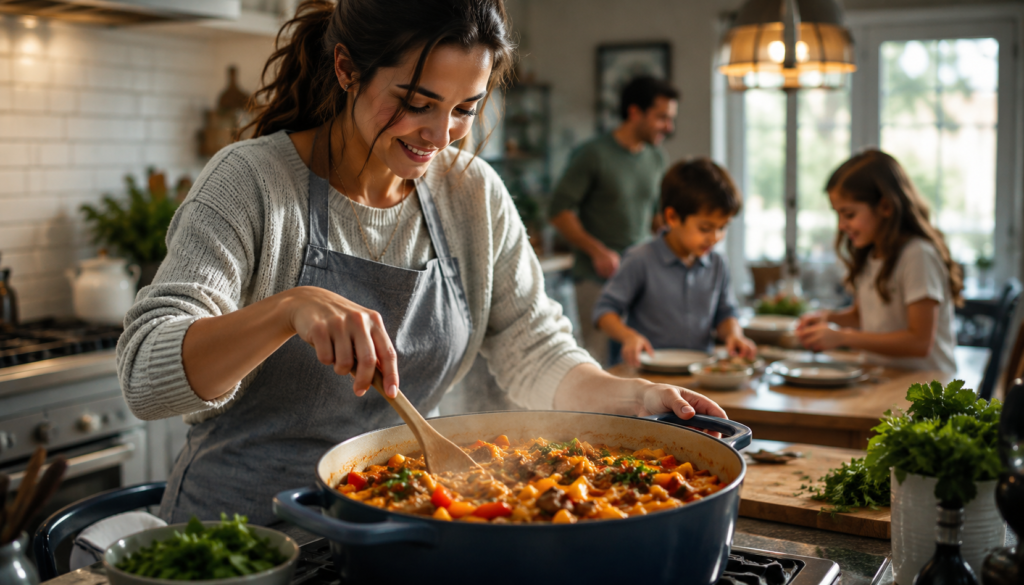
Easy one-pot weeknight dinners help busy families save time, reduce cleanup, and enjoy fresh homemade meals with simple ingredients and shared kitchen moments.
Practical Tips
Start with a realistic timeline. Most weeknight one-pot dinners take 25 to 50 minutes from stove to table. Choose recipes where protein and vegetables finish at similar times, or use quick-cooking grains like orzo or couscous to shave minutes.
Mise en place matters. Chop vegetables, measure spices, and have stock or canned tomatoes within reach before you heat the pan. Browning protein in batches builds flavor; it only adds 5 to 8 minutes but pays back with savory depth.
Use smart swaps. If a recipe calls for chicken thighs and you only have breasts, cut them into larger chunks and reduce simmer time. Canned beans are a cheap shortcut for added protein and fiber; add them late to warm through without breaking down. If you need gluten-free, swap pasta for rice or quinoa and increase cooking liquid slightly.
Mind the liquid. One-pot recipes succeed when the amount of liquid matches the starch you cook in it. For pasta, use just enough broth so the noodles finish slightly al dente and release starch to thicken the sauce. For rice, follow the grain-to-liquid ratio but account for evaporation; a tight-fitting lid is your friend.
Amp flavor at the end. A squeeze of lemon, a splash of vinegar, or a pat of butter right before serving brightens the dish and makes leftovers taste fresher. Fresh herbs add fragrance and a sense of home-cooked richness.
Plan for cleanup. Use a heavy-bottomed skillet or a Dutch oven that goes from stovetop to table. Line a small bowl with foil to collect scraps as you cook, saving time on rinsing cutting boards.
Stretch your budget. Use seasonal vegetables and frozen vegetables when fresh produce is pricey. Bulk grains and legumes are economical anchors; a little goes a long way when combined with aromatic vegetables and spices.
Real Example
Here’s a practical recipe you can finish in about 35 minutes: a tomato-chicken-chickpea one-pot dinner that feeds four and costs little when you buy pantry staples.
Ingredients in plain pantry-friendly terms: bone-in or boneless chicken thighs (6–8 pieces), 1 onion chopped, 3 cloves garlic minced, 1 can diced tomatoes, 1 can chickpeas drained, 1 cup low-sodium chicken stock, 1 tsp smoked paprika, 1 tsp ground cumin, salt and pepper, handful of baby spinach or chopped kale, and a squeeze of lemon.
How to cook it: Heat a tablespoon of oil in a heavy skillet over medium-high heat. Season chicken with salt, pepper, and a bit of paprika. Brown chicken skin-side down until golden, 4 to 5 minutes per side for boneless or a touch longer for bone-in; remove and set aside. In the same pan, lower heat and sauté the onion until translucent, about 5 minutes, scraping up browned bits. Add garlic, cumin, and remaining paprika and cook 30 seconds until fragrant. Pour in tomatoes and stock, stir to loosen stuck bits, then return the chicken to nestle into the sauce. Add chickpeas, bring to a simmer, and cover. Cook 12 to 18 minutes depending on piece size until chicken reaches safe temperature and the sauce thickens. Stir in greens off heat so they wilt without overcooking, finish with lemon and a pinch of salt.
Why this works: Browning builds Maillard flavors, canned tomatoes provide acidity and body, and chickpeas add texture and budget-friendly protein. The method is flexible: swap beans for lentils (pre-rinsed) or use tofu for a vegetarian switch, increasing simmer time slightly for lentils. Leftovers serve well over rice or couscous or mashed into a sandwich for lunch.
Timing and shortcuts: Use store-bought rotisserie chicken to cut cook time to 10 minutes — skip browning and stir shredded chicken into the simmering sauce just to heat through. Use frozen spinach to avoid chopping.
Serving and meal prep: Pair with quick couscous or buttered pasta. To meal-prep, store in airtight containers for up to 4 days; reheat gently and add a fresh squeeze of citrus to brighten stale flavors.
Conclusion
One-pot weeknight dinners are not shortcuts to blandness but a strategy for consistent, satisfying home cooking when life is full. With a little planning, a modest pantry, and the simple techniques above, you can turn pantry staples into meals that feel nourishing and deliberate. Start with one reliable recipe, learn how ingredients respond, and you’ll build a small rotation of family favorites that save time, reduce waste, and make weeknights taste like home.