
Introduction
Short, realistic changes at home add up. This article collects practical sustainable living tips you can actually do between soccer practice, study sessions, and work shifts—whether you rent an apartment, own a house, or share a dorm room. The goal is manageable green home habits that reduce waste, save energy, and improve family life without perfectionism.
Main Insight
The core idea is incremental habits: pick a few easy swaps that fit your schedule and budget, then layer more as you go. Small actions—switching to reusable containers, starting a kitchen compost, sealing drafty windows, or planting a tree—deliver visible benefits and build momentum. Expect realistic trade-offs: some swaps take upfront time or money but save cash and hassle later. Framing changes around routines (meal prep day, laundry night, weekend garden time) makes them stick.

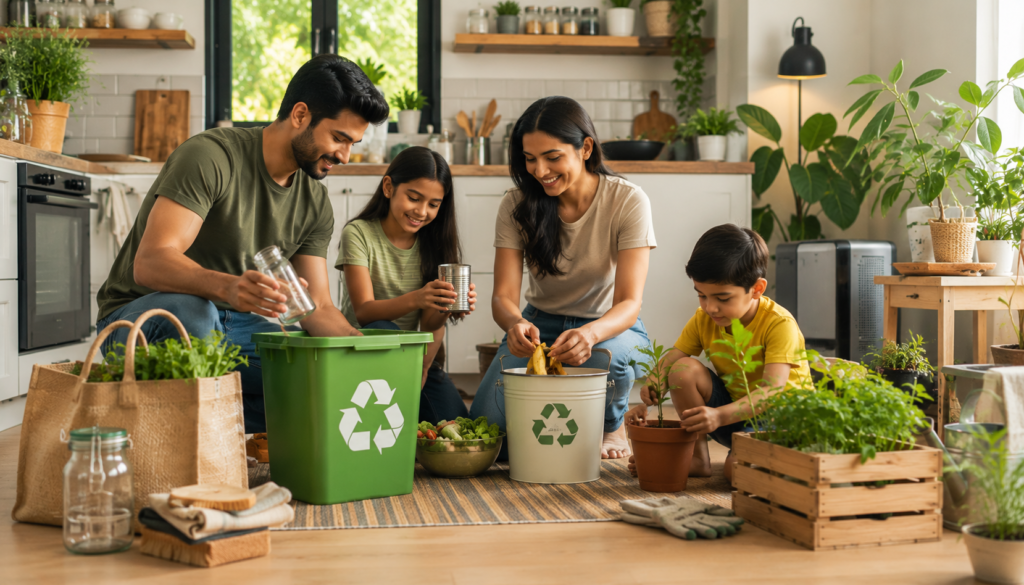
A busy family makes sustainable living simple with reusable items, low-waste food habits, composting, and small home gardening routines.
Practical Tips
1. Start with the kitchen: replace disposable wrap with reusable beeswax wraps or silicone lids, buy staple goods in bulk where possible, and plan two meat-free dinners a week. These moves cut packaging waste and simplify grocery runs.
2. Make composting simple: if you have outdoor space, start a small bin for fruit and vegetable scraps, coffee grounds, and eggshells. No yard? Try a countertop worm bin or join a neighborhood drop-off. Even a single quart of compost collected each day feeds a garden or community planter and keeps organic waste out of landfill.
3. Choose reusable household products: microfiber rags, washable mop pads, refillable cleaning sprays, and sturdy glass food jars reduce one-use clutter. Replace paper towels with a stack of absorbent cloths kept under the sink—use one per week and wash with laundry.
4. Save energy with low-effort fixes: swap to LEDs, install a programmable thermostat or use a smart plug schedule, and seal windows and doors with weatherstripping. These changes often pay back in months, and they’re easy tasks for renters that don’t alter walls.
5. Repair before replacing: a torn pair of jeans, a leaky faucet, or a dull kitchen knife can often be fixed. Teach kids basic mending or set up a monthly repair afternoon—it’s cheaper, creative, and keeps items out of the trash.
6. Shop with intention: buy fewer, better-made items; choose secondhand for kids’ clothes and furniture; bring a tote and containers for bulk purchases. When you do buy new, check for refill options or take-back programs.
7. Involve the family with simple routines: make recycling sorting a 3-minute after-dinner task, assign one child the compost scoop, or gamify energy saving with a monthly points chart. Small responsibilities build lasting habits.
8. Plant trees strategically: in urban yards, choose a small native tree for summer shade and pollinator habitat; in rural or village settings, plant fruit trees near homes for food and soil protection; in community spaces, organize a tree-planting afternoon for neighborhood shade and social connection. Trees are a long-term, low-effort investment in climate resilience and local biodiversity.
9. Accept trade-offs: a refillable stainless steel water bottle weighs more than a disposable one; bulk buys require storage space; living greener sometimes means fewer “instant” options. Choose the trade-offs that match your life: if you travel a lot, focus on energy and waste reductions at home; if you host often, prioritize reusable dishware and composting.
Real Example
The Parkers are a two-parent family with two school-age kids living in a small suburban house. Time is tight, so they picked three changes for the fall: a weekly meal-prep routine, an outdoor compost tumbler, and planting a dwarf apple tree in the side yard.
On Sundays they batch-cook two grain salads and chop vegetables for school lunches—one hour saves weekday scramble and reduces takeout. Their compost tumbler sits near the back steps; kids drop in fruit peels and paper towels after dinner, and once a month the compost goes to the raised beds. The apple tree, planted near the patio, will provide afternoon shade on the hottest days, small fruit for snacks, and a place the kids claim as their treehouse future spot. Financially, the family saw grocery savings from less waste, reduced trash pickup volume, and a small increase in neighborhood wildlife (pollinators and birds) that made gardening more rewarding.
For renters or students: a windowsill herb pot, a compact worm bin under a desk, and a shower timer to cut water use are low-barrier, high-impact choices. Urban residents can team up with neighbors to plant a street tree or create a community planter that improves curb appeal and provides shade.
Conclusion
Sustainable living doesn’t require a total lifestyle reboot. Focus on a few meaningful, doable habits—kitchen swaps, composting, energy fixes, repair and reuse, and planting trees—then build from there. Celebrate small wins, accept realistic trade-offs, and involve family or roommates to make green change social and lasting. Over time, these practical choices create healthier homes, lower bills, and a quieter, more hopeful way of living with the planet.