

Introduction
A small, repeatable routine after dinner can cut waste, save energy, and teach kids good habits without upending a busy household. This piece collects practical, manageable sustainable living tips families actually use — low-waste swaps, quick composting, energy-saving chores, and one simple tree-planting idea that multiplies benefits. No extremes, just small actions that add up and feel doable on weeknights.
Main Insight
The core idea: pick two to three short, consistent habits that fit the family’s schedule and do them every evening. Consistency beats perfection. When a habit takes two minutes and produces visible results — a smaller trash bag, a full compost bucket, phone-free family time under a newly planted tree — it’s more likely to last. Combine habits that save money (energy tweaks, meal planning) with those that build identity (reusable containers, fixing instead of tossing) and you create momentum.
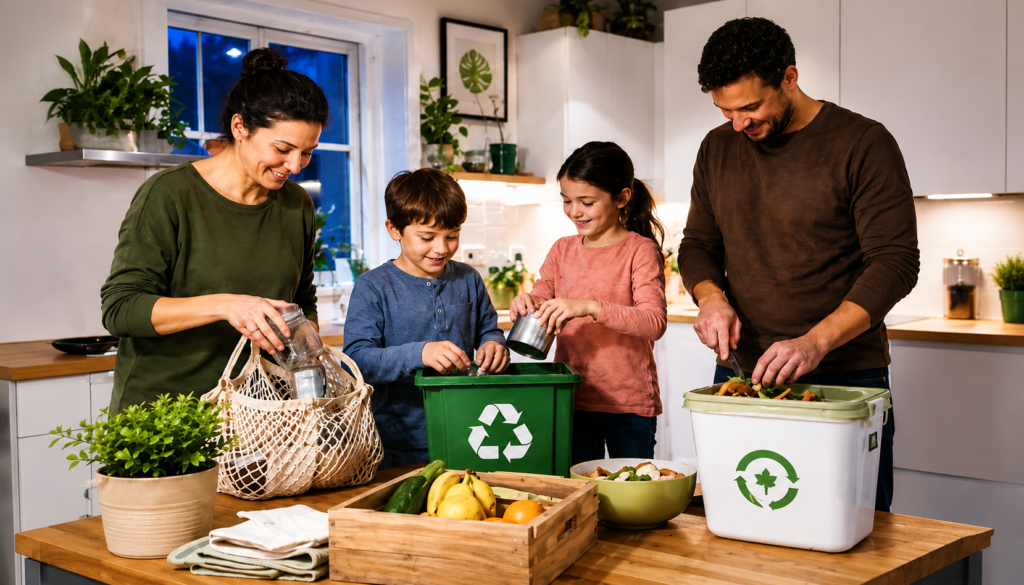
Simple family routines like recycling, composting, and reusing everyday items can make sustainable living easier to maintain at home.
Practical Tips
1) Make the kitchen a low-waste zone in 10 minutes nightly. After dinner, scrape plates into a small countertop compost pail lined with a compostable bag or washable cloth. Rinse reusable containers and stack them for the next day. Swap one single-use item each month — for example, replace sandwich bags with silicone bags or beeswax wraps.
2) Create an “unplug and save” five-minute sweep. Turn off unused lights, unplug phone chargers and small appliances, and set the thermostat back one degree (or adjust the smart schedule). It’s quick and saves both energy and the small mental clutter of devices left on.
3) Host a weekly “repair and sort” slot. Dedicate 15–30 minutes once a week to mend one item (a ripped kid’s sweatshirt, a loose button) and sort donations or recycling. Teaching children to sew a patch or use a basic toolkit turns repair into family time and reduces impulse replacement.
4) Keep a compact compost system for beginners. An indoor pail with a tight lid or a worm bin on a balcony works for renters and homeowners alike. Empty the countertop pail into the main bin twice a week. If you don’t have space, many neighborhoods have community compost drop-off points — or check if a nearby farmer will take food scraps.
5) Make sustainable shopping simpler. Keep a running grocery list on the fridge and buy for three to four dinners at a time. Choose loose produce when possible, pack reusable produce bags, and favor bulk staples in reusable containers. This reduces packaging and often saves money.
6) Teach kids through small chores. Assign age-appropriate tasks like rinsing vegetable scraps into the compost pail, sorting plastic from paper for recycling, or watering one planter. Turning chores into tiny, repeatable rituals helps them internalize habits without heavy lecturing.
7) Plant one tree a year as a family project. If you own a yard, pick a fruit or shade tree for a visible, long-term payoff. Renters can join a community tree-planting day or sponsor a sapling in a local park. Trees provide shade, reduce energy use, improve soil, and teach kids about stewardship.
8) Embrace realistic trade-offs. Pre-packed convenience items are sometimes necessary. If you buy single-use occasionally, balance it with an extra evening of composting or a month of skipping bottled beverages. The goal is progress, not purity.
Real Example
The Thompsons are a suburban family of four with two school-age children and two jobs. Their nightly routine takes about 12 minutes and follows a clear flow:
– 7:00–7:05 pm: Clear the table. Each person scrapes food into a countertop compost pail and rinses their reusable plate or stores leftovers in silicone bags. The kids race to be the fastest scraper; the winner gets to pick a bedtime story.
– 7:05–7:08 pm: The “lights and plugs” sweep. One child is the designated light-checker, the other the plug-checker. They turn off the dining area lights and unplug the blender and phone chargers. The thermostat is set back one degree using the wall switch.
– 7:08–7:12 pm: Quick tidy and donation box. While the dishwasher runs, the family does a five-minute tidy: collect items to donate or repair and place them in the donation box by the door. Once a month they deliver that box to a community center.
On the first Saturday of spring, the Thompsons join neighbors for a tree-planting day at a local park. They help plant three native saplings — one shady oak, one small fruit tree, and one flowering shrub — and explain to their children how the trees will cool the playground, attract pollinators, and provide fruit in a few years. The kids get stickers and feel proud of a visible contribution.
The Thompson routine reduces their weekly trash by about one bag, cuts small appliance phantom loads, fills their compost bin for weekend transfer to a municipal drop-off, and builds a sense of family purpose around sustainability. The trade-offs are real: sometimes a late night means skipping the sweep, and they accept that. On balance, they’ve built rituals that fit their life.
Conclusion
Sustainable living at home doesn’t require a total lifestyle overhaul. Start with two to three short, repeatable habits that save time or money and feel rewarding: a nightly compost scrape, a five-minute energy sweep, and a seasonal tree-planting day. These small moves add up to cleaner kitchens, lower bills, fewer trips to the store, and a family culture that values repair, reuse, and nature. Make the steps visible, celebrate small wins, and be gentle with setbacks — that’s how lasting green routines are born.