
Introduction
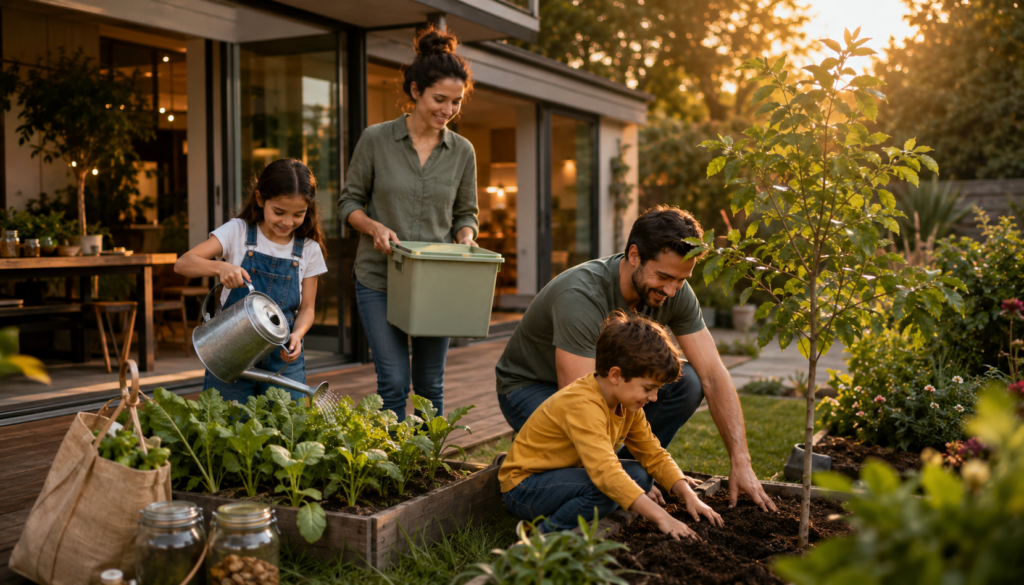
Short, manageable sustainability steps often win where radical overhauls fail. For busy families juggling work, school, and errands, greener living needs to fit into existing routines — not replace them. This article shares realistic, low-stress sustainable living tips and green home habits that reduce waste, save energy, and build family-friendly eco-routines without adding overwhelm.
Main Insight
The core idea is cumulative simplicity: small, consistent changes across the home add up to meaningful impact. Focus on swaps and habits that are affordable, time-efficient, and flexible. That might mean switching to reusable food storage, adding a small compost bin to the kitchen, adjusting how you do laundry, or planting a shade tree in the yard. Each change should have an immediate convenience or cost benefit so families stick with it.
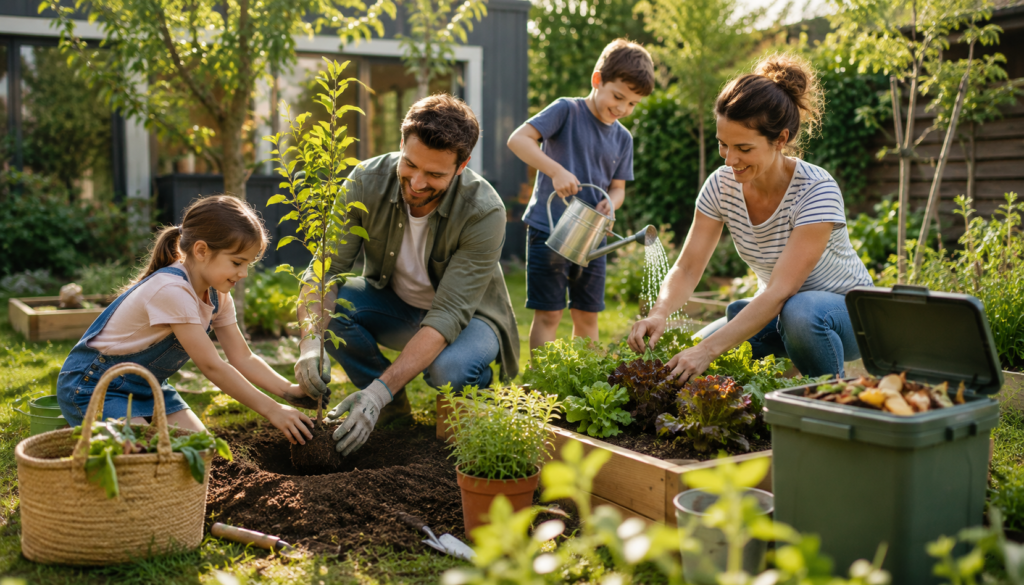
A family builds greener daily habits together through tree planting, composting, gardening, and simple sustainable choices at home.
Practical Tips
1. Start with three easy swaps. Pick one from kitchen, one from cleaning, and one from energy. For example: reusable beeswax wraps or silicone lids, refillable spray cleaners in a labeled bottle, and programmable thermostats or smart power strips to cut standby energy.
2. Make waste visible and actionable. Place a small counter compost bucket with a tight lid and compostable liners. Empty it into a backyard compost pile or community drop-off every few days. For renters, use a bokashi bin or a sealed indoor composter that fits under the sink.
3. Family routines beat solo willpower. Create a short weekly ritual: a 10-minute Sunday session to sort recycling, check pantry expiration dates, and plan meals around leftovers. Involve kids with age-appropriate tasks — a 6-year-old can label jars or press food scraps into the compost bucket.
4. Adopt reusable household products strategically. Start where single-use waste is highest. For many families that’s kitchen paper towels, sandwich bags, and water bottles. Invest in a roll of durable kitchen towels, a set of reusable snack bags, and insulated water bottles for school.
5. Energy saving at home without discomfort. Lower thermostat by 2 degrees in winter and raise by 2 degrees in summer; seal obvious drafts with weatherstripping; swap one frequently used light to an LED. Use timers on water heaters or shift heavy laundry to cooler hours. These moves are low-effort and often lower bills within months.
6. Sustainable kitchen ideas that save time. Plan two “leftover rescue” meals weekly, keep a running grocery list on the fridge, and use a clear storage system so food doesn’t get forgotten. Use slow cookers or sheet-pan meals that are energy-efficient and family-friendly.
7. Repair and reuse before replace. Teach quick fixes: sew a button, patch a hole in jeans, or re-glue a loose chair leg with a clamp. For larger items, local repair cafes, tool libraries, or community workshops are practical alternatives to throwing things away.
8. Low-waste shopping habits. Buy in bulk where possible, favor concentrated cleaning products, and carry reusable produce and grocery bags. For families on a budget, compare unit prices and prioritize reusable items with long lifespans.
9. Composting for beginners. Start with scraps that are easiest: fruit and vegetable peels, coffee grounds, eggshells. Avoid meat, dairy, and oily foods in open backyard piles. Turn or stir a pile every week to speed breakdown, or use a tumbler composter for faster, neater results.
10. Green habits for kids and teens. Turn eco-actions into games or challenges. A monthly “waste-free lunch” reward, a tree-planting day with classmates, or a neighborhood cleanup doubles as family time and environmental learning.
Real Example
The Martinez family — two working parents, a toddler, and a high-schooler — wanted a greener home but had limited time. They began with three changes: a counter compost bucket set, switching one weekly laundry load to cold water, and replacing disposable sandwich bags with reusable cloth pouches. The compost bucket eliminated nearly all food-soiled disposables, cold washing saved on electricity bills without compromising cleanliness, and the reusable pouches simplified morning routines. On weekends they planted a small native fruit tree in the yard with neighbors, which gradually provided shade, attracted pollinators, and gave the kids a hands-on connection to food and soil. Those small steps translated into lower waste, modest savings, and a sense that sustainability could sit inside their regular family rhythm.
Conclusion
Greener daily routines don’t have to be dramatic. Practical, family-friendly sustainable living tips are about choosing a few lasting habits that fit your life — whether you live in an apartment, a suburban house, or a rural village. Start small, measure the personal benefits (time saved, money kept, family connection), and scale what works. Planting a tree, setting up a compost system, swapping to reusables, and making energy-smart choices are realistic trade-offs that build resilience, biodiversity, and comfort for your household and community.