
Introduction
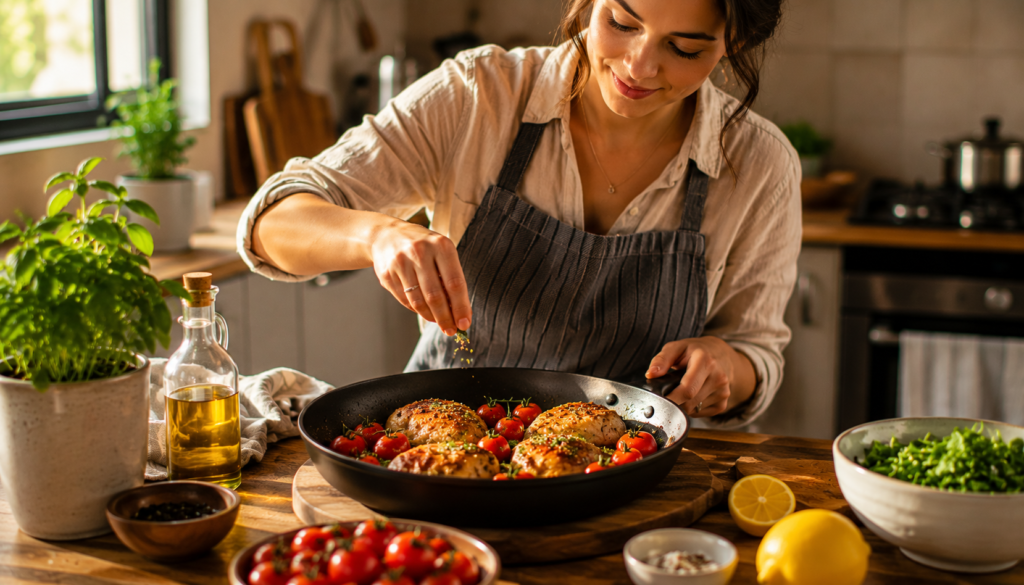
Short, realistic meals don’t require culinary heroics. This guide helps home cooks turn pantry staples into flavorful, time-smart dinners, breakfasts, and batches to stretch a budget. Expect clear ingredient lists, honest time estimates, and practical swaps so you can cook confidently and eat well any night of the week.
Main Insight
The core idea is a simple framework: pick one strong protein or grain, add seasonal vegetables, choose one bold seasoning or sauce, and cook with a technique that limits cleanup. That approach delivers maximum flavor with minimal fuss because it focuses energy where it matters — browning, acid, and seasoning — rather than on complex steps. When you know which elements to prioritize, substitutions and timing become easy, and results are consistently satisfying.
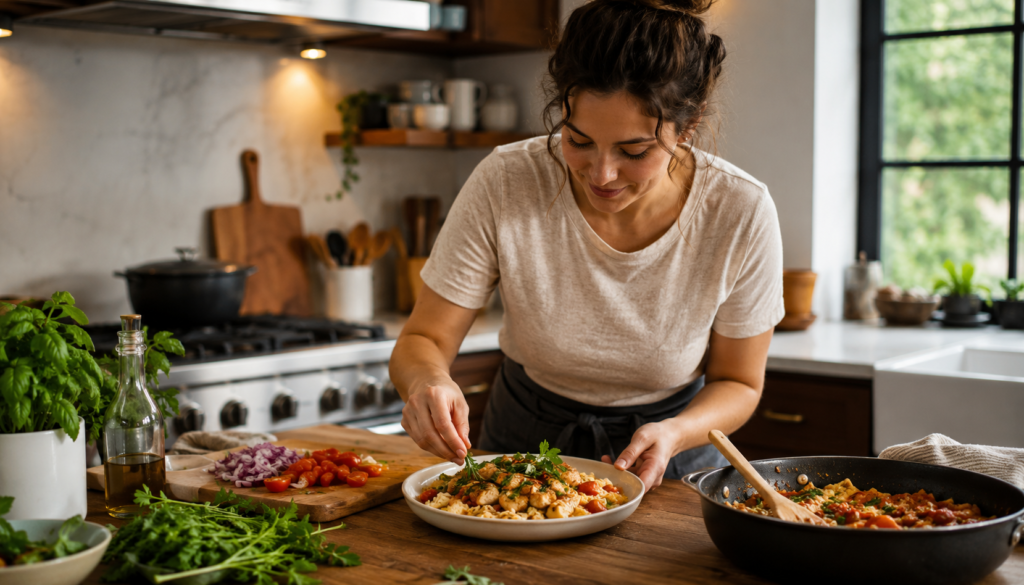
A cozy homemade dinner scene with fresh herbs, colorful ingredients, and a simple skillet meal that shows how easy recipes can still feel warm, fresh, and home-cooked.
Practical Tips
1) Ingredient clarity: list precise amounts and textures. For example, “1 lb boneless chicken thighs, trimmed and patted dry” tells you exactly what to buy and prepare. When a recipe calls for “softened butter,” a short note like “leave at room temperature for 30 minutes” prevents guesswork.
2) Time expectations: give realistic totals and active times. If a dish takes 40 minutes total with 20 minutes active, say so. That helps cooks plan dinner while finishing homework or prepping a quick salad.
3) Flavor payoff: focus on three layers — seasoning during cooking, an acid to brighten, and a finishing fat for silk. Salt early and taste often; a squeeze of lemon or splash of vinegar at the end lifts flavors dramatically.
4) Step-by-step confidence: break techniques into small, named actions. Instead of “cook until done,” use “sear skin-side down 6–8 minutes until deeply golden, then flip and reduce heat.” Precise timing removes hesitation.
5) Realistic substitutions: list two practical swaps per ingredient. For example, swap quinoa for couscous, Greek yogurt for sour cream, or swap a bell pepper for zucchini if it’s cheaper or seasonal. Keep texture and cooking time in mind: dense roots take longer than tender greens.
6) One-pot and meal-prep rules: choose recipes that share a base (olive oil, onion, garlic, stock) so you can batch-cook sauces and proteins. Cook grains in bulk, roast vegetables on sheet pans, and reheat with a splash of broth to restore moisture.
7) Homemade sauces and simple baking tips: teach one reliable sauce like a pan sauce from browned meat drippings, wine or stock, and butter or yogurt to finish. For baking beginners, measure precisely, use an oven thermometer, and start with forgiving recipes like skillet breads or sheet pan cookies.
Real Example
One-pan lemon herb chicken with roasted vegetables — 30 minutes active, 40 minutes total.
Ingredients:
– 1 lb boneless, skin-on chicken thighs (4 thighs), patted dry
– 1 lb small potatoes, halved
– 1 red onion, cut into wedges
– 1 cup cherry tomatoes
– 3 tbsp olive oil, divided
– 1 tsp kosher salt, 1/2 tsp black pepper
– 1 tsp dried oregano or 1 tbsp chopped fresh thyme
– Zest and juice of 1 lemon
– 2 cloves garlic, thinly sliced
Substitutions and notes:
– Use bone-in chicken breasts if you prefer white meat; add 5–10 minutes and check internal temp of 165°F.
– Replace potatoes with sweet potatoes or a can of drained chickpeas for a vegetarian pan; adjust time if using chickpeas (they only need reheating).
Steps:
1) Preheat oven to 425°F. Toss potatoes and onion with 1.5 tbsp oil, 1/2 tsp salt, and roast on a sheet pan for 15 minutes.
2) While vegetables start, season chicken thighs with remaining salt, pepper, and oregano. Heat a large ovenproof skillet over medium-high and add 1 tbsp oil. Sear chicken skin-side down 6–8 minutes until richly browned; flip 2 minutes.
3) Add garlic to the skillet, nestle par-roasted potatoes and onion around the chicken, scatter tomatoes, drizzle remaining oil, and transfer skillet to the oven. Roast 10–12 minutes until chicken reaches 165°F and potatoes are tender.
4) Remove skillet, squeeze lemon juice over everything, sprinkle zest and herbs, and let rest 5 minutes. Spoon pan juices over servings.
Flavor notes and storage:
– Browning the chicken creates caramelized bits that form the base of the pan sauce; the final lemon brightens the dish. For extra gloss, whisk 1 tsp butter into the drippings before serving.
– Refrigerate leftovers in an airtight container for up to 3 days. Reheat gently with a splash of water or stock to prevent dryness.
Conclusion
Cooking repeatedly good meals is about reliable techniques as much as recipes themselves. Use clear ingredient cues, honest time estimates, and simple seasoning rules to make weeknight dinners, quick breakfasts, and budget-friendly batches that taste intentional. With a few go-to substitutions and one or two homemade sauces in your repertoire, you’ll build a practical, delicious rotation that keeps the whole family coming back for seconds.