
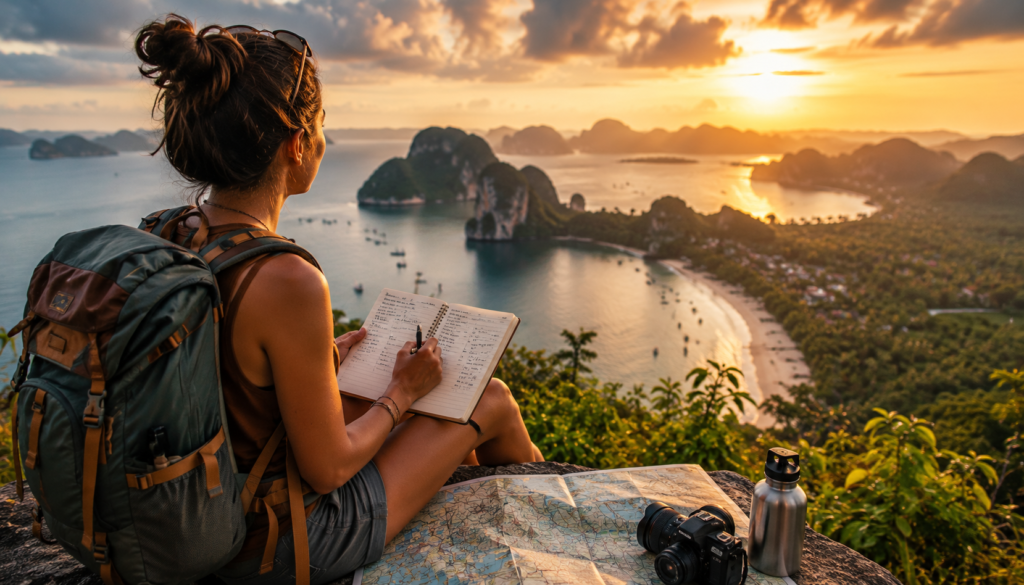
Introduction
Short trips become memorable when planning balances vivid experiences with clear logistics. This guide stitches together practical itineraries and on-the-ground decision-making for travelers who want adventure without guesswork—covering seasons, rough costs, safety, and how to adapt plans for solo, family, budget, or road-trip styles.
Main Insight
Good itineraries are frameworks, not scripts. Pick a realistic daily rhythm (drive, hike, rest), anchor it to a few trusted logistics choices (one basecamp, one mobile night, two booked activities), and build local experiences around those anchors. That structure keeps costs predictable, reduces stress, and leaves room for spontaneous moments like a roadside food stall or an impromptu swim.
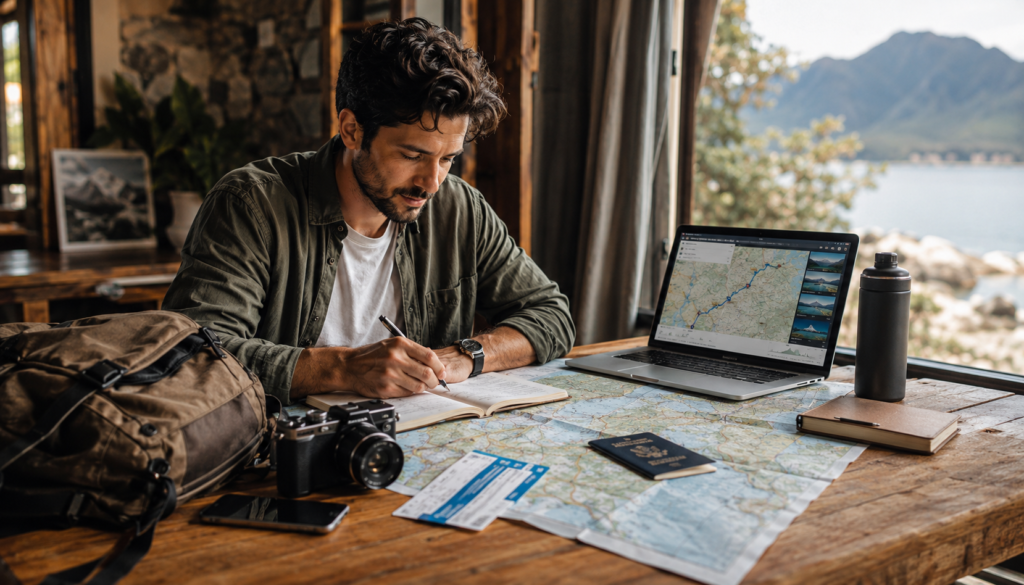
A practical travel planning scene showing how maps, itineraries, budgets, and destination research can help solo travelers prepare for a smoother adventure.
Practical Tips
1) Define your traveler profile and time box: are you solo with 7 days and flexible nights, a family with 4 days and gear to manage, or a budget traveler with five fixed nights? Choose a trip length that matches rest and transit needs—weekend getaways (2–3 days), short escapes (4–6 days), or deeper trips (7–10+ days).
2) Season and weather strategy: Avoid peak extreme weather months for high-altitude hikes; aim for shoulder seasons for fewer crowds and lower rates. Check historical weather patterns and carry a flexible day-by-day contingency: morning hikes and afternoon shore drives are a simple seasonal swap when storms roll in.
3) Realistic cost framing: Use ranges, not absolutes. Expect accommodation to vary widely—budget hostels or campsites to modest hotels. Factor in fuel or local transport, groceries vs. restaurants, entry fees, and one guided experience. For a mid-range mixed trip, plan a daily average range rather than a single number and adjust for family size, vehicle fuel use, and booked activities.
4) Logistics and pacing: Distill each travel day into three parts—move, do, rest. For road trips, cap driving at 3–5 hours on most days to allow exploration. For family travel, build in two buffer stops per day (playground, scenic overlook). For solo adventurers, schedule at least one social activity (a guided walk or cooking class) to meet locals safely.
5) Safety and preparedness: Download offline maps, bring a basic first-aid kit, and know local emergency numbers. For hiking, share a simple plan with someone at home: route, start time, and expected return. Check wildlife advisories and pack appropriate deterrents or storage for food. For road travel, carry spare fluids, a tire repair kit, and a power bank.
6) Local experiences that matter: Swap an evening restaurant meal for a community market or a bread-making demonstration with a local host. Ask at visitor centers for vetted local guides—small, paid guiding outfits enrich the community and often offer deeper stories than generic tours.
7) Sustainable travel choices: Minimize single-use plastics, choose locally owned lodging and eateries, stay on marked trails, and offset footprint through time or money—volunteer a morning at a community trail clean-up, or buy a craft directly from a maker.
8) Hiking essentials: sturdy footwear, layered clothing, rain shell, 2–3 liters water capacity (or a reliable treatment option), headlamp, multi-tool, navigation device, emergency blanket, and lightweight stove or food for longer days.
Real Example
A realistic 7-day solo road-and-hike loop (mixed terrain, mid-elevation):
Day 1: Arrive mid-afternoon, grocery stop, set up basecamp in a small town lodge. Short walk to shake off travel.
Day 2: Morning drive 1.5–2 hours to trailhead; 4–5 hour day hike with picnic; return to base. Pack layers and water treatment. Cost notes: trail permit or parking fee may apply.
Day 3: Swap a long hike for a cultural morning—visit a community market, take a 2-hour cooking workshop, and reserve evening for gear prep.
Day 4: Move day—drive a scenic 3-hour stretch to a new valley campsite or budget inn. Two short stops for viewpoints. Keep fuel buffer for mountain stretches.
Day 5: Full-day guided backcountry hike or multi-stop coastal loop with a local guide (book ahead if peak season). Expect higher per-day spend when hiring a guide but greater safety and stories.
Day 6: Recovery day—short walks, local museum, laundry, and leisurely meals. A good day to buy supplies for travel home.
Day 7: Short morning hike, check out, and depart. Leave time for unexpected delays.
Example cost framing: lodging varies by choice; allow a flexible per-night range and a separate activity fund for one guided experience. Safety adjustments: if storms are forecast mid-week, swap long hikes for cultural days earlier in the trip.
Conclusion
Plan with purpose: pick a clear rhythm, budget in ranges, and build in one local connection and one safety buffer per trip. That mix keeps travel vivid and manageable—whether you’re solo, traveling with family, on a tight budget, or mapping a road-trip loop. Start with a simple 3-part day plan (move, do, rest) and let the place reshape the rest.