
Introduction
Everyday life is full of small choices that add up. You don’t need to overhaul your whole routine or chase perfection to live more sustainably. Practical, family-friendly habits—like smarter energy use, low-waste swaps, and kitchen changes—can shrink your footprint, save money, and feel doable. This guide offers straightforward actions you can try this week without drama or sacrifice.
Main Insight
Real progress comes from consistent, realistic changes that fit your life. Rather than rare, dramatic gestures, aim for a handful of repeatable habits: reduce energy waste, choose reusable items where they make the most difference, minimize food waste, repair instead of replace, and make small garden or shopping shifts. These compound over time and are easier to sustain when they’re simple and family-friendly.

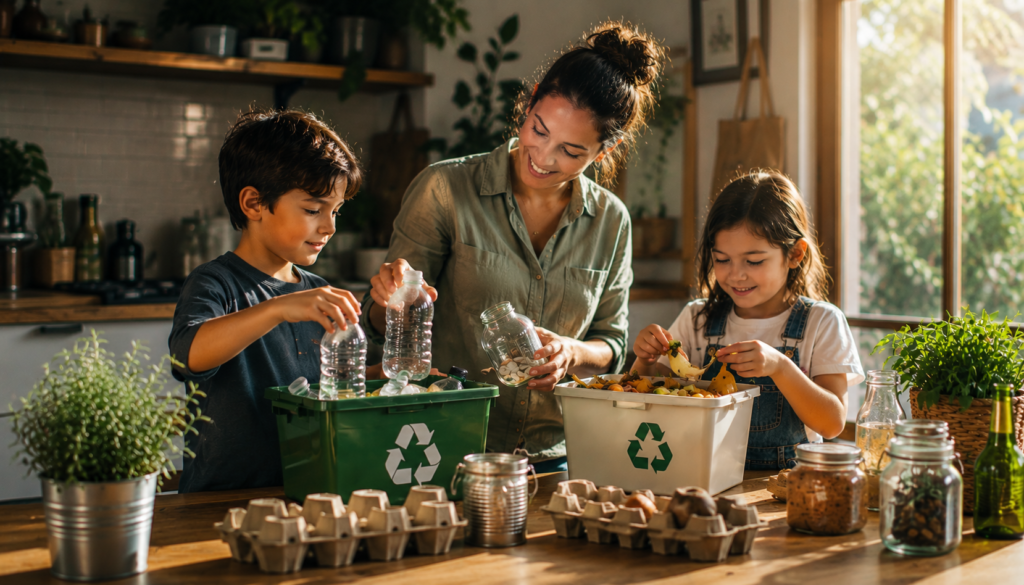
A family practices simple green home habits by sorting recyclables, composting food scraps, using reusable containers, and preparing fresh produce together.
Practical Tips
Start with energy savings
1. Swap lighting: Replace the five most-used bulbs with LEDs. They use far less energy and last years.
2. Tweak your thermostat: Lower heating by 1–2°F in winter and bump cooling by 2–3°F in summer. Use a programmable or smart thermostat for automatic savings.
3. Unplug phantom loads: Use a power strip for entertainment centers and chargers so you can switch devices fully off when not in use.
Make the kitchen low-waste and sustainable
1. Plan meals and shop with a list to reduce impulse buys and leftovers.
2. Store food properly: clear containers and visible labeling help you use food before it goes bad.
3. Swap disposables: use cloth towels, beeswax or silicone wraps, and reusable produce bags.
4. Cook smarter: batch-cook and freeze portions in reusable containers to cut waste and energy per meal.
Composting and food cycles
1. Start small: a countertop compost bin or sealed jar for scraps prevents smells and makes the habit easy.
2. Learn what’s accepted locally—some municipalities accept compostable bags and yard waste, others prefer drop-off.
3. Use compost in container gardens or donate to a community garden if you don’t have space.
Repair, reuse, and smart shopping
1. Before replacing, try a simple repair: patch clothing, replace appliance filters, or tighten a loose hinge.
2. Buy durable: choose products with repairable parts and good warranties, especially for items you use daily.
3. Secondhand first: check local resale shops or online marketplaces for furniture, kids’ gear, and tools.
Family-friendly habits
1. Make it a game: a “no-waste dinner” challenge once a week gets kids involved and reduces food waste.
2. Teach simple chores like sorting recycling, refilling soap dispensers, and tending a small herb pot.
3. Normalize reuse: keep reusable cutlery and cups in your car or bag to avoid disposables on the go.
Gardening and outdoor swaps
1. Even a few window herbs cut grocery trips and plastic packaging.
2. Choose native plants and mulch to reduce water needs and support local pollinators.
3. Collect rainwater for garden watering where allowed.
Money-smart swaps
1. Calculate payback: many energy upgrades have clear financial returns—LEDs, weatherstripping, low-flow showerheads.
2. Set small goals: invest savings from energy bills into a sustainable home fund for larger upgrades later.
Keep it realistic and non-judgmental
1. Pick two changes you can do this month and celebrate them.
2. Swap rather than eliminate: If composting isn’t possible today, focus on food planning or a reusable container habit.
3. Progress over perfection: small habits that stick beat grand plans that fizzle.
Real Example
A typical family of four wanted to lower waste and energy use without stress. Week one they swapped five bulbs to LEDs and started using a power strip for the TV and gaming consoles. Week two they introduced a countertop compost pail and labeled clear storage containers in the fridge. Week three they replaced single-use kitchen towels with a roll of washable cloths and set a single “no-waste” meal night. After two months they noticed lower electric bills, less food tossed, and simpler grocery trips. The kids helped water a small herb box, which made them more likely to eat what they’d grown.
Conclusion
Sustainable living doesn’t require perfect behavior—just sensible, repeatable choices that match your household. Start with one or two small habits, build them into routine, and scale when it feels natural. Over time these manageable changes create a greener home, a lighter budget, and a household culture that values repair, reuse, and thoughtful consumption. Little steps lead to real results—start with what’s easiest and grow from there.